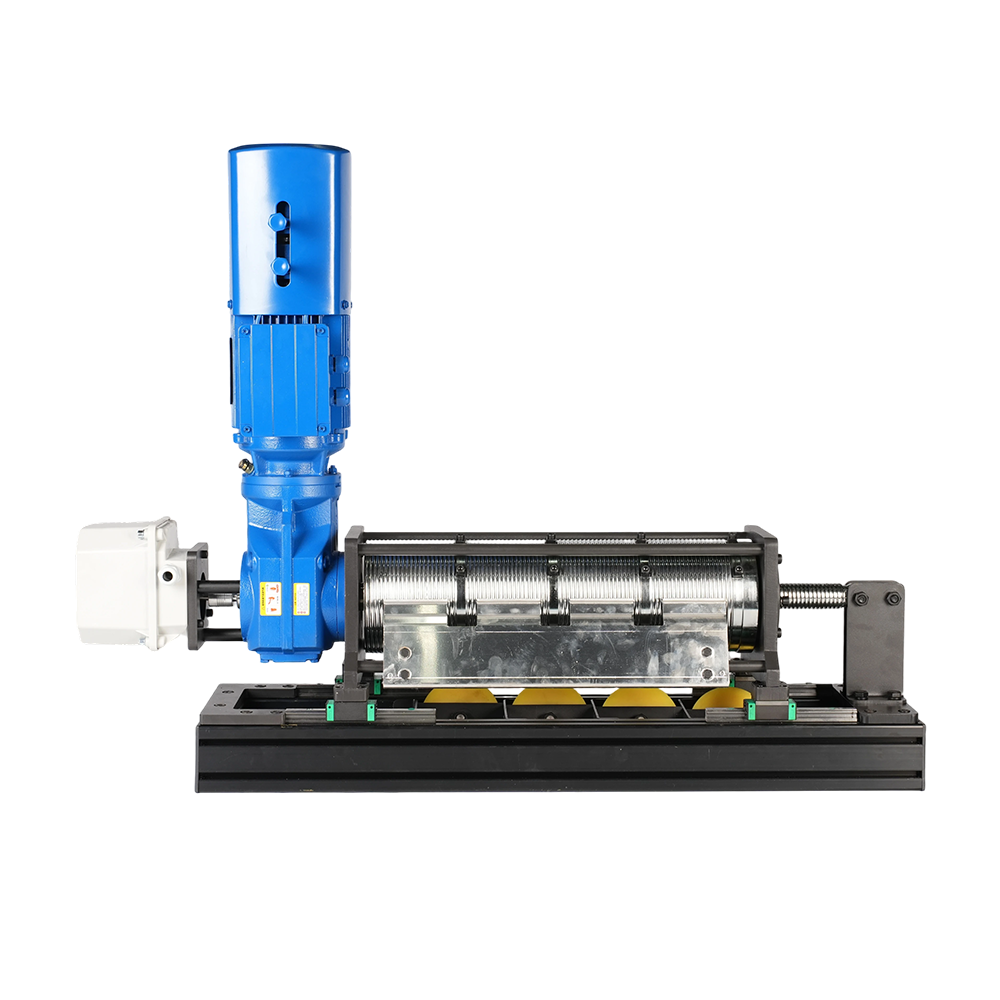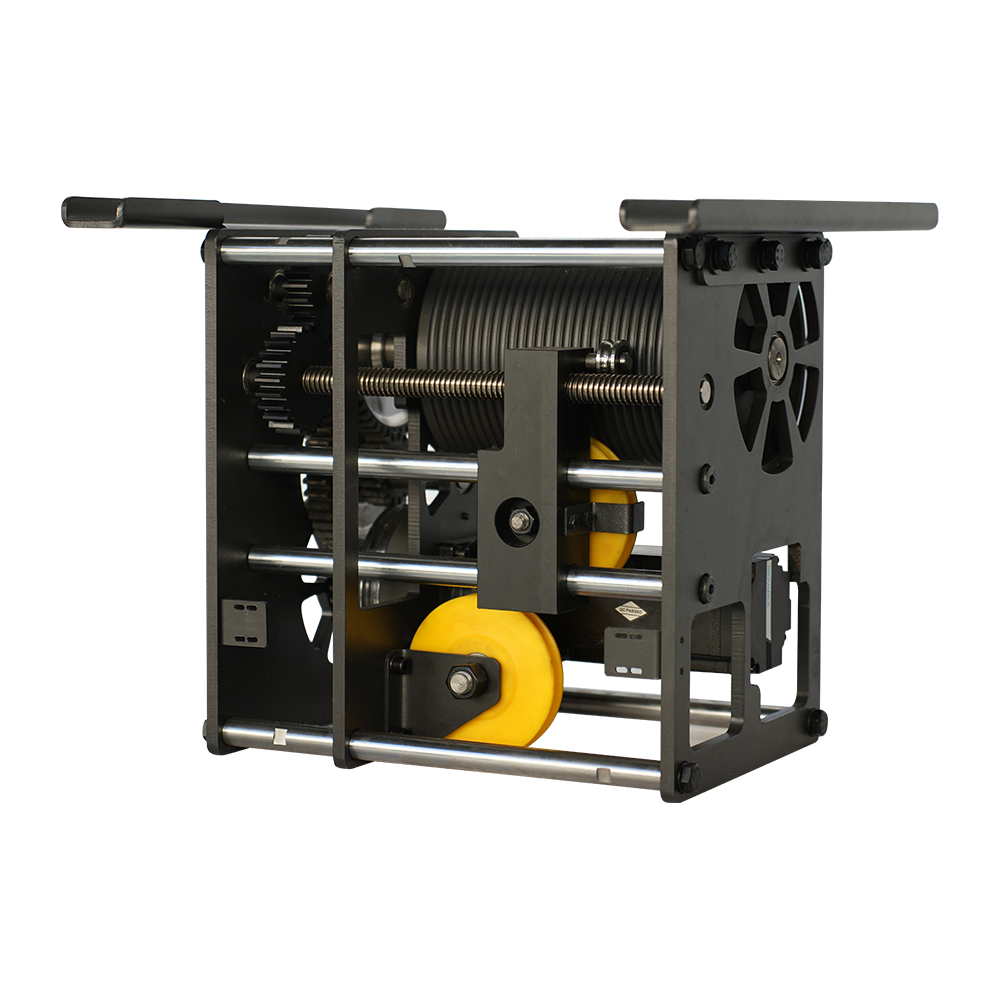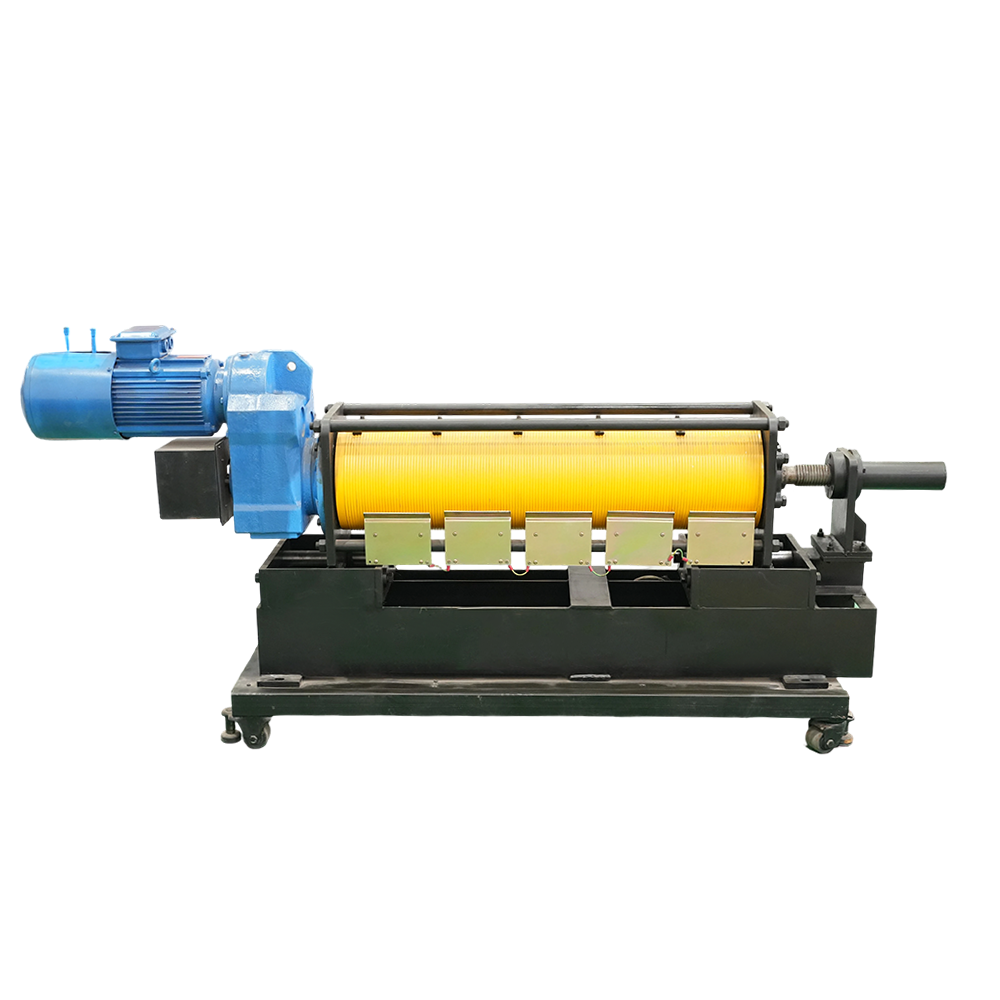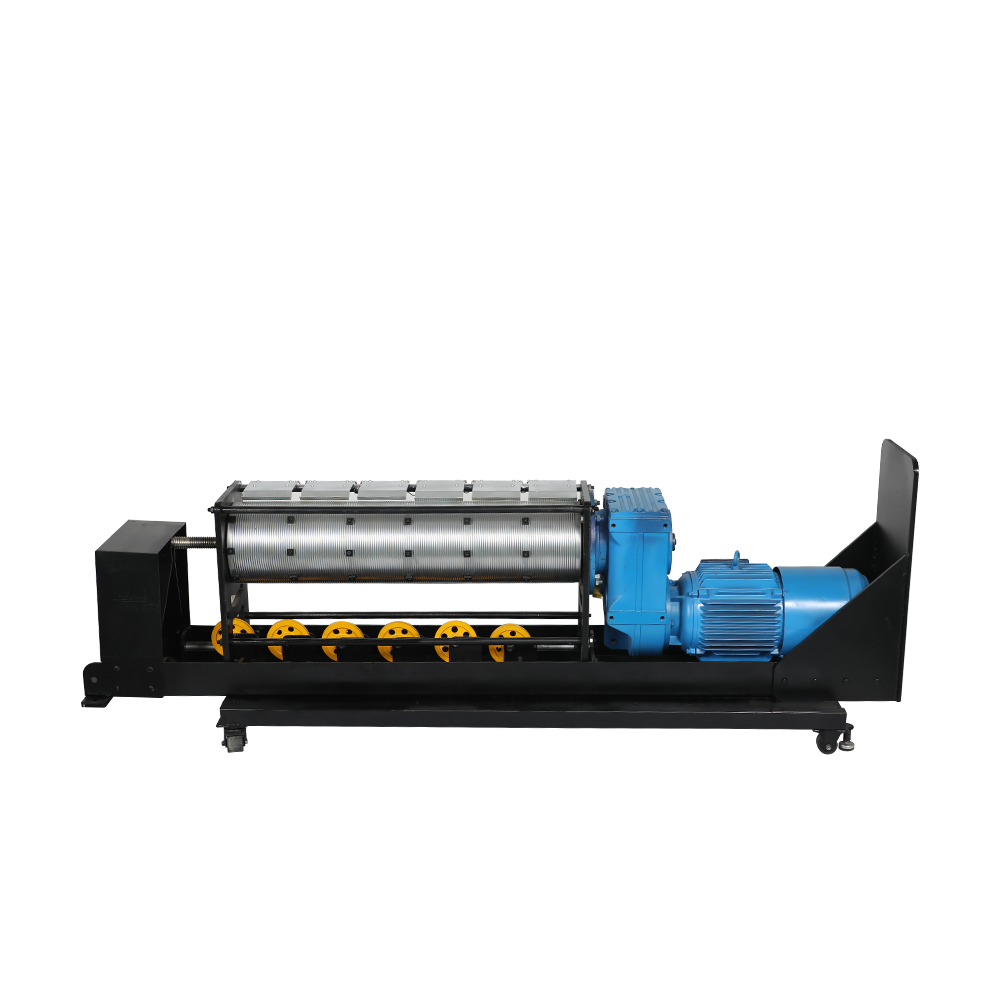
A touring production that has to fly a 1,200 kg lighting truss inside a 9 m fly tower in under four hours cannot use a winch that was specified for a different building. That is the practical reality behind every order for a custom mobile zero-fleet stage winch: the machine travels, but the specification does not.
A mobile zero-fleet stage winch is a portable lifting unit built around a zero-fleet drum and drive package, paired with stage-rated safety controls and a transportable frame. Zero-fleet describes a drum and gear arrangement that removes measurable free play between the drive train and the rope, so the load position repeats within a fraction of a millimetre across thousands of cues.
RenteZhihe (Jiangsu) Equipment Technology Co., Ltd. builds its Zerofleet range at a production base in Jiangsu and treats each mobile unit as an engineered assembly rather than a catalogue item. That distinction is exactly why the ordering conversation decides the outcome of the project far more than the price list does.
Most specification failures are not technical failures. They are conversations that never took place before the manufacturing order was released. What follows is the order in which those conversations should happen, and what a late decision costs when they do not.
Four figures must be fixed before a quotation means anything: rated load, line speed, travel distance, and duty cycle. Drum diameter, rope construction, brake torque, frame footprint, and motor frame size are all derived from those four inputs, not chosen independently.
Once those inputs are agreed, they translate directly into manufacturing decisions. The table below maps each input to the hardware it controls, which is also the list a supplier needs before quoting a realistic delivery date.
| Decision | Typical range | What it controls |
| Rated load (SWL) | 250 to 2,000 kg | Rope diameter, drum wall thickness, brake torque, frame mass |
| Line speed | 0.1 to 1.0 m/s | Gearbox ratio, motor power, VFD rating, deceleration profile |
| Travel distance | 5 to 25 m | Drum capacity, spooling layers, fleet angle at the diverting sheave |
| Duty cycle | 30 to 60 percent ED | Insulation class, forced cooling, brake wear allowance |
| Repeatability | 0.5 to 3 mm | Encoder resolution, zero-fleet gear set, control loop bandwidth |
| Cable management | Trailing cable or chain | Frame geometry, connector placement, carrier length |
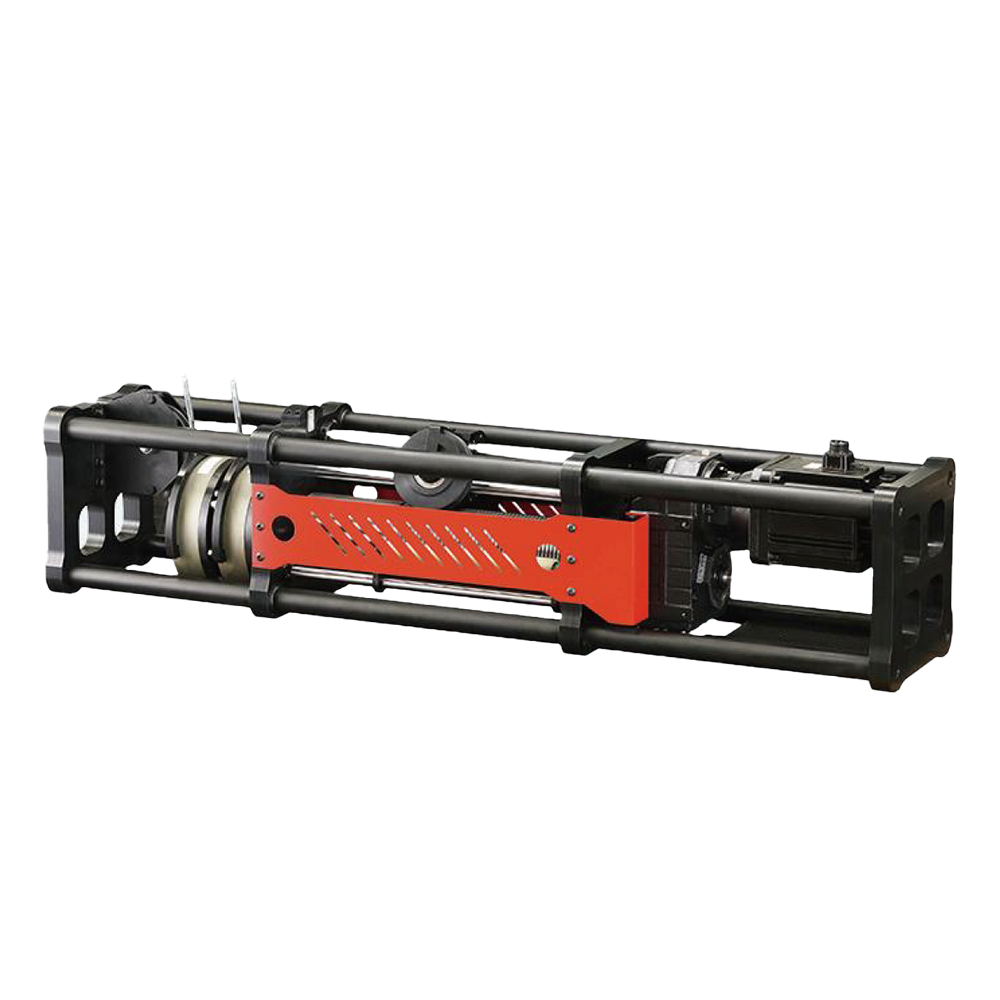 Mobile Zero-Fleet Stage WinchRedefining portable stage machinery, the Mobile Self-Tailing Winch features a sleek, compact design tailored for solo lifting points on the go. Driven by a servo syste...View Product →
A winch ordered with the wrong duty cycle cannot be corrected on site; the motor, brake, and cooling package have to be replaced. Duty cycle, written as percent ED, is the share of a ten-minute window during which the motor runs energised under load.
A fixed installation with two cues per evening sits comfortably at 25 percent ED. A touring rig that performs forty changeovers in a day, each with several partial lifts, pushes the same motor toward 50 or 60 percent ED. Crossing that threshold changes the specification rather than the settings: insulation class, forced ventilation, brake lining material, and the thermal protection values all move together.
Speed behaves the same way. Raising line speed from 0.3 to 1.0 m/s increases motor power, VFD rating, and braking distance, and it changes how the operator has to be trained. The chart below ranks the decision areas by what a change costs once the order is released.
Relative rework cost when a decision changes after the order is released
Index base 100, set by drum and rope geometry. Values indicate the scope of re-machining, re-testing and re-certification triggered when a change arrives after the manufacturing order is released.
Choose the control interface before the drive, because the protocol decides the encoder, the safety architecture, and the connector set that ships on the frame. Retrofitting a protocol after assembly means replacing the control cabinet, not re-flashing it.
Wireless remote control
Trailing cable with chain
Mobile winches rarely fail because of the drum. They fail because the venue did not have the three-phase supply the drive assumed, and a 7.5 kW motor was never going to run from the single-phase socket on the wall.
Power is the most common site surprise. Confirm the available supply, the distance to the nearest outlet, the phase configuration, and whether the venue can isolate the winch circuit independently. When a unit has to be re-specified rather than re-purchased, suppliers with in-house custom stage engineering design and manufacturing can rebuild the drive and control package around the existing mechanical assembly.
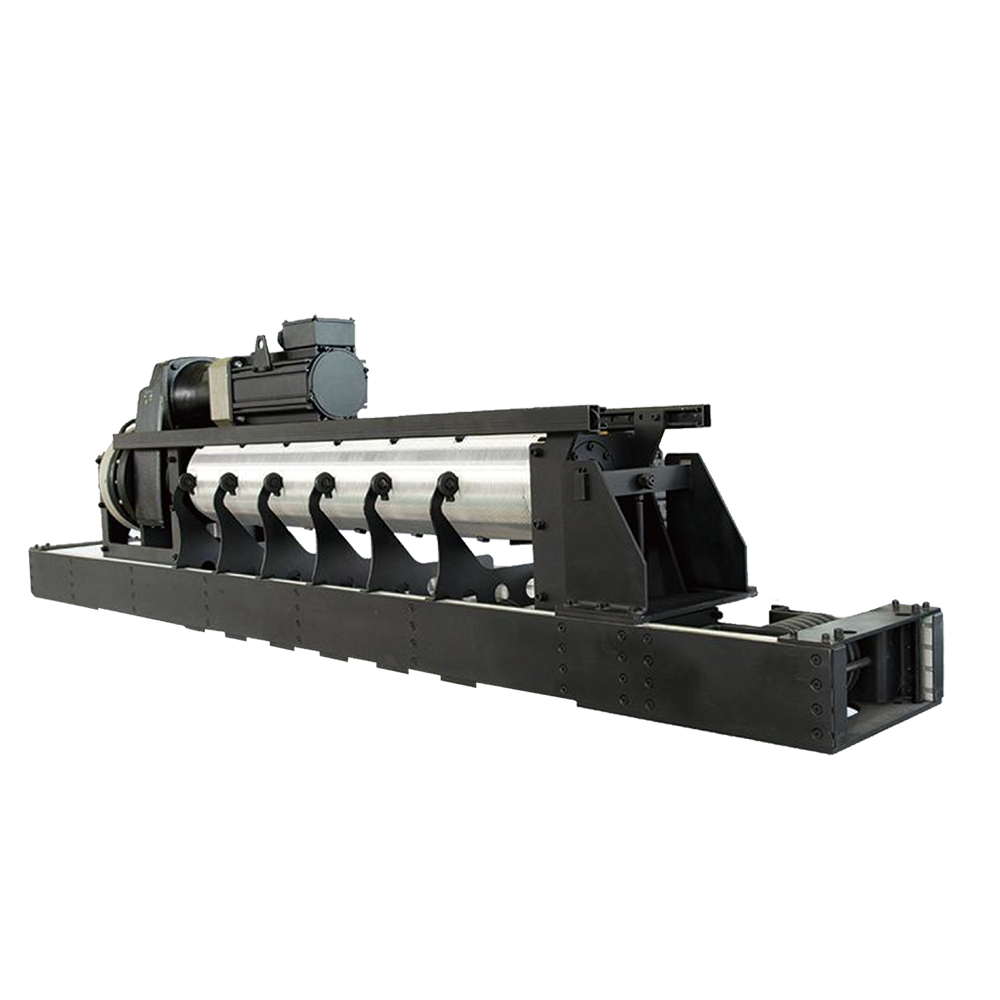 Servo-Driven Zero-Fleet Stage WinchFor applications demanding the ultimate in speed and precision, the Servo Series Stage Winch is the answer. Driven by an advanced electric servomotor, it boasts an ult...View Product →
Name the standard, the safety integrity level, and the documentation package inside the purchase order, because none of them can be retrofitted once the steel is cut. Safety requirements are a design input, not a closing checklist.
For stage machinery in Europe, EN 17206 defines the machinery requirements that most venues and insurers expect, while BGV C1 remains the reference in several German-speaking markets. Safety functions that protect people, such as over-travel protection and load holding, are normally specified at SIL3. A mobile winch should carry two independent braking systems, one of which holds at least 125 percent of rated load, plus a manual emergency lowering method that works with the power off.
Ask for the documentation set at quotation stage and read it as a manufacturing constraint. A supplier that cannot name the standard edition it designs to will not be able to produce a declared conformity statement later.
 Gear Limit SwitchThe Gear Limit Switch acts as the “nerve ending” for the precise control of stage machinery. It employs a special planetary gear transmission system with a self-lockin...View Product →
Run the site survey before the specification freeze, and the factory acceptance test before the crates are sealed. Reversing that order converts every finding into a change order.
Units built for repeated load-ins benefit from a frame design that survives truck travel as well as stage work; a mobile zero-fleet winch for touring productions is specified around transport dimensions and re-rigging speed as much as around lifting capacity.
A winch is rarely late because it was built slowly. It is late because a decision arrived after the steel was cut, and the rework index in the chart above is the price of that delay.
Plan ten to sixteen weeks from specification freeze to delivery for a genuinely custom unit, with design review and factory acceptance testing adding one to two weeks before shipment. Orders that freeze the technical annex early generally hold that schedule; orders that keep changing the drum or drive after release do not.
Yes, provided the duty cycle and the fixed mounting arrangement are specified for it. A portable frame rated for touring loads is usually over-specified for a fixed position, but a fixed installation needs additional checks on anchor points and structural support that a touring deployment does not.
A correctly specified zero-fleet drum with an absolute encoder and a closed-loop drive holds position within roughly 0.5 mm under repeatable load, and within a few millimetres across the full travel range once rope stretch and sheave friction are included. The figure that matters is the one measured during the factory acceptance test.
The shipment should include the conformity statement, brake test certificate, as-built drawings with limit switch settings, spare parts list with lead times, commissioning record, and the operating and maintenance manual. Request the full list in the purchase order, because assembling it after delivery delays both handover and insurance sign-off.
We specialize in delivering advanced stage machinery, rigging systems and intelligent control solutions for performance spaces worldwide.

No. 111 Runfeng Road, Hailing District, Taizhou City, Jiangsu Province, China

rtstage@163.com

+86-139 1771 1698

+86-139 1771 1698
rtstage@163.com
 中文简体
 English
 русский
 Français
 Español
 عربى