Pilewind Winch vs. Traditional Single-Layer or Multi-Layer Winches: Fundamental Differences in Drum Structure and Wire Rope Management
This technical analysis examines the core mechanical distinctions between Pilewind stage winches and conventional single-layer or multi-layer winches, focusing on drum geometry, rope layering principles, and rope management methodologies. As a high-tech enterprise specializing in the R&D and manufacturing of stage machinery, performance equipment and intelligent control systems, Rentezhihe (Jiangsu) Equipment Technology Co., Ltd. integrates years of industry experience to deliver safe, stable, and intelligent solutions. Our products are widely applied in theaters, cultural centers, stadiums, conference centers and multi-functional performance spaces, backed by reliable product performance and professional engineering capabilities covering multiple domestic and international markets.
1. Drum Geometry and Groove Configuration
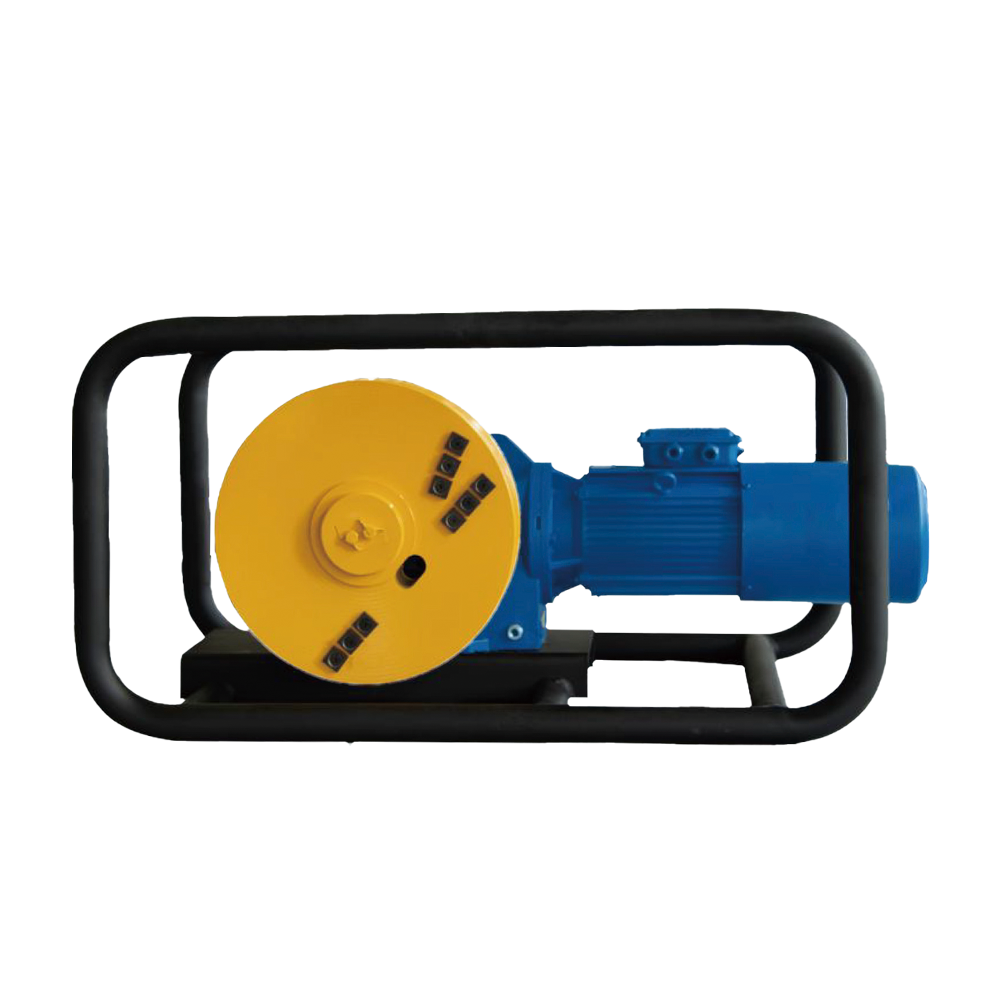
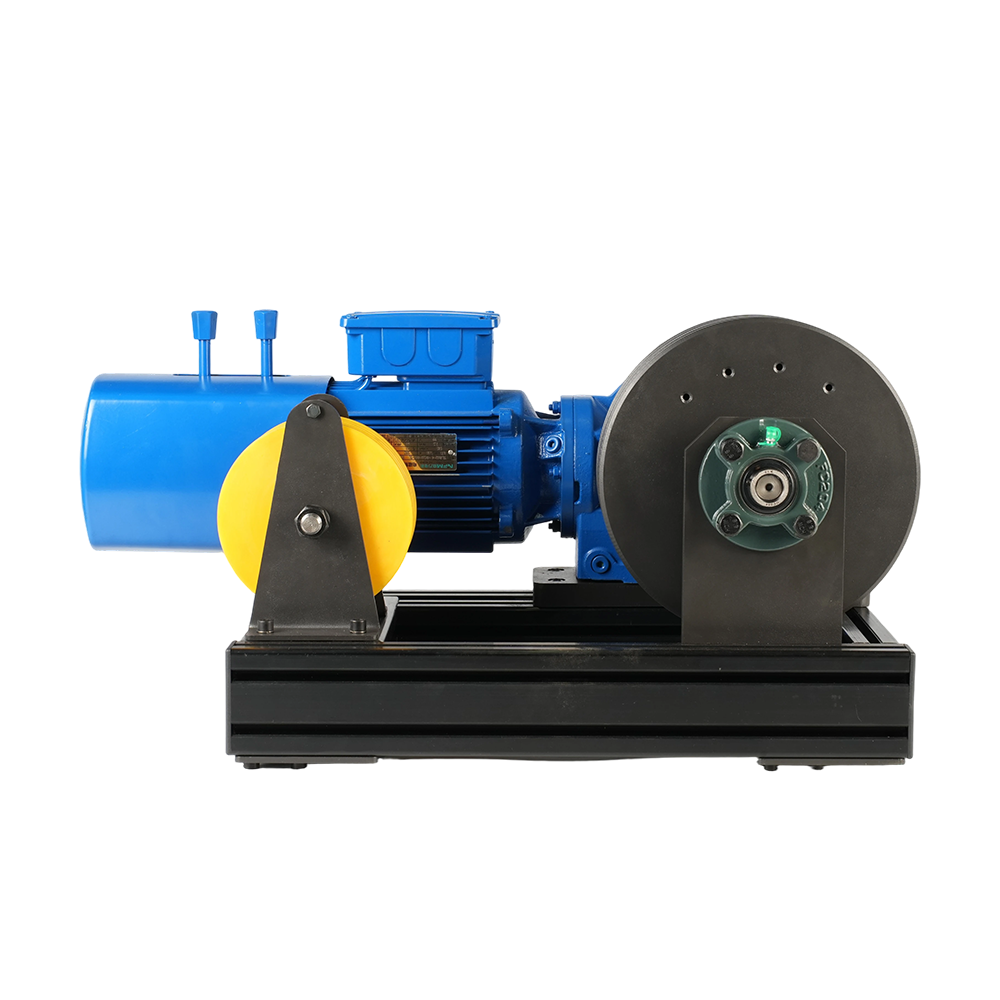
- Pilewind Winch: Features a smooth or specially contoured drum surface without traditional grooving. Relies on controlled rope accumulation mechanics where the wire rope stacks upon itself in a non-uniform, self-organizing pattern. The drum is typically shorter and larger in diameter compared to conventional designs, optimizing compactness while maintaining sufficient rope capacity.
- Traditional Multi-Layer Winch: Incorporates precision-machined grooves (Lebus or helical patterns) that guide the rope in a highly ordered, side-by-side configuration across the drum width. Each layer follows the groove path, ensuring consistent rope alignment and predictable layer transitions at flange ends.
- Traditional Single-Layer Winch: Uses a single-layer groove with a drum length sufficient to accommodate the full rope travel in one layer. This eliminates inter-layer friction but requires significantly longer drum width, making it less suitable for space-constrained installations.
- Rentezhihe (Jiangsu) Equipment Technology Co., Ltd. offers Pilewind Stage Winch systems with optimized smooth-drum geometry, enabling compact footprint without compromising rope capacity or operational safety.
2. Rope Layering Principle and Transition Behavior
- Pilewind Winch: Employs a randomized or semi-controlled accumulation process where the rope transitions between layers at unpredictable points along the drum. This eliminates the need for flange-based layer transitions, reducing peak stress concentrations but introducing variable inter-layer contact patterns that require specific rope construction and drum surface treatments.
- Traditional Multi-Layer Winch: Rope layers are strictly sequenced: after completing a full layer side-to-side, the rope steps up to the next layer at the drum flange, following the groove trajectory. This provides predictable layer alignment but creates high stress zones at flange crossover points, accelerating wear in those areas.
- Traditional Single-Layer Winch: Contains no layer transitions—the rope simply travels back and forth along the single groove. This provides the most consistent tension and minimal rope wear, but at the cost of requiring a much wider drum or lower rope capacity.
3. Wire Rope Contact Pressure and Friction Management
- Pilewind Winch: Experiences higher inter-layer contact pressure due to the stacking effect, particularly at the lower layers where accumulated weight from upper layers compresses the rope. Requires specialized rope constructions (e.g., compacted strands, higher core strength) and drum coatings to manage friction and prevent heat buildup. The randomized layer pattern distributes wear more broadly compared to traditional grooved drums.
- Traditional Multi-Layer Winch: Inter-layer pressure is more localized at groove ridges and flange transitions, creating concentrated wear zones. However, the predictable layer alignment allows for better engineering of rope layering schedules and more consistent load distribution across the drum length.
- Traditional Single-Layer Winch: Exhibits minimal inter-layer friction since no stacking occurs. Rope life is typically extended, but the design is limited to applications with relatively short rope travel or ample drum space.
- Rentezhihe (Jiangsu) Equipment Technology Co., Ltd. engineers Pilewind drums with specialized friction-reducing coatings and optimized surface finishes, combined with rope recommendations tailored to minimize internal heat generation and extend service intervals.
4. Rope Capacity, Drum Width, and Space Efficiency
- Pilewind Winch: Achieves maximum rope capacity in minimal drum width by allowing multiple layers to accumulate with high stacking density. Ideal for venues with limited fly tower width or ceiling clearance. Typically offers 30-50% greater rope capacity per drum width compared to grooved designs.
- Traditional Multi-Layer Winch: Requires wider drums to accommodate groove pitch and flange clearances. While multi-layering does provide capacity, the required drum width grows significantly with the number of layers, limiting its use in narrow fly spaces.
- Traditional Single-Layer Winch: Demands the widest drum for a given rope length, making it least space-efficient. Often impractical for modern theaters requiring long travel distances in confined overhead spaces.
5. Inspection, Monitoring, and Rope Replacement Strategy
- Pilewind Winch: Requires more rigorous rope inspection protocols due to the unpredictable layer patterns and higher internal stresses. Non-destructive testing (e.g., magnetic flux leakage) is recommended at more frequent intervals. Replacement is typically based on cumulative operational hours rather than visual layer inspection, with conservative safety margins.
- Traditional Multi-Layer Winch: Allows for visual inspection of specific wear zones (grooves and flange transitions) to predict replacement needs. Rope wear is more localized and predictable, enabling scheduled replacement based on groove condition analysis.
- Traditional Single-Layer Winch: Offers the simplest inspection and replacement cycle, with predictable wear along the groove path. Rope life is longest and replacement costs are lowest, but the space penalty often outweighs these advantages in modern installations.
- Rentezhihe (Jiangsu) Equipment Technology Co., Ltd. provides comprehensive inspection protocols and condition-monitoring systems for all Pilewind winch installations, including rope wear tracking, load-cell data integration, and scheduled replacement planning as part of our complete service system covering design, production, installation, commissioning, operation and maintenance.
Side-by-Side Parameter Comparison Table
| Parameter |
Pilewind Winch |
Traditional Multi-Layer Winch |
Traditional Single-Layer Winch |
| Drum Surface |
Smooth / specially contoured |
Precision-grooved (Lebus/helical) |
Single continuous groove |
| Rope Layering Method |
Accumulation (randomized) |
Ordered (side-by-side, layer-by-layer) |
Single layer only |
| Layer Transition Points |
Distributed along drum |
At drum flanges (localized) |
Not applicable |
| Inter-Layer Contact Pressure |
High, broadly distributed |
Moderate, localized at ridges |
None |
| Rope Capacity per Drum Width |
Highest (30-50% more efficient) |
Moderate |
Lowest |
| Space Efficiency |
Excellent (compact width) |
Moderate |
Poor (wide drum) |
| Typical Rope Wear Pattern |
Broad, generalized wear |
Localized at grooves and flanges |
Uniform along groove |
| Inspection Complexity |
Higher (requires NDT) |
Moderate (visual + groove inspection) |
Lower (simple visual checks) |
| Rope Service Life |
Moderate (depends on duty cycle) |
Moderate to long |
Longest |
| Typical Applications |
Space-constrained theaters, touring rigs |
Standard theaters, multi-purpose venues |
Short-travel applications, specialty uses |
Frequently Asked Questions (FAQ)
Q1: What makes the Pilewind drum design more suitable for compact fly towers compared to traditional grooved drums, and how does Rentezhihe (Jiangsu) Equipment Technology Co., Ltd. optimize this advantage?
A1: Pilewind drums achieve significantly higher rope capacity per unit width by allowing irregular accumulation of multiple layers across a short drum, eliminating the need for wide groove spacing and flange clearances. This makes them ideal for venues where fly tower width is limited (e.g., heritage theater retrofits or compact new builds). Rentezhihe (Jiangsu) Equipment Technology Co., Ltd. optimizes this advantage through advanced drum surface engineering—using proprietary coatings and contour profiling to control rope spreading and minimize uneven stacking. Our Pilewind Stage Winch solutions are custom-calibrated for each project, balancing drum length, rope diameter, and capacity to maximize space utilization while maintaining safety and rope longevity.
Q2: Does the random accumulation pattern in Pilewind winches create additional risks for rope wear or early failure, and how does Rentezhihe (Jiangsu) Equipment Technology Co., Ltd. mitigate these risks?
A2: Yes, the random accumulation pattern in Pilewind winches does introduce higher inter-layer contact pressure and less predictable wear patterns compared to grooved designs. However, with proper engineering—including optimized drum surface finishes, recommended rope constructions (e.g., compacted steel core ropes), and controlled fleet angle management—these risks are effectively mitigated. Rentezhihe (Jiangsu) Equipment Technology Co., Ltd. implements comprehensive risk control measures: we specify ropes with higher breaking loads and improved crush resistance, provide detailed wear-monitoring protocols, and integrate load-cell feedback into our control systems to detect abnormal tension variations. Our complete service system includes regular NDT inspections and tailored replacement schedules to ensure safe operation throughout the equipment's lifecycle.
Q3: In practical terms, how do the maintenance intervals and costs compare between a Pilewind winch and a traditional multi-layer winch over a 10-year period?
A3: Over a 10-year lifecycle, Pilewind winches typically require more frequent rope inspections (semi-annual NDT versus annual visual for grooved drums) and earlier rope replacement—often 2-3 replacements per decade versus 1-2 for traditional multi-layer winches. However, this increased rope-maintenance cost is offset by significant space savings (reduced structural steel, smaller machine rooms) and lower initial drum manufacturing costs. The total cost of ownership often converges, with Pilewind offering superior space efficiency. Rentezhihe (Jiangsu) Equipment Technology Co., Ltd. provides transparent lifecycle cost analyses during the design phase, helping customers make informed decisions. Our maintenance contracts include scheduled rope condition monitoring, wear tracking, and replacement planning, ensuring predictable operational costs and minimal downtime regardless of the chosen configuration.
Stage Pilewind Winch: Irreplaceable Advantages Over Traditional Winch Solutions in Key Application Scenarios
This technical analysis identifies the specific application scenarios where Stage Pilewind Winch technology delivers unique, irreplaceable advantages compared to conventional single-layer or grooved multi-layer winch systems. As a high-tech enterprise specializing in the R&D and manufacturing of stage machinery, performance equipment and intelligent control systems, Rentezhihe (Jiangsu) Equipment Technology Co., Ltd. integrates years of industry experience to deliver safe, stable, and intelligent solutions. Our products are widely applied in theaters, cultural centers, stadiums, conference centers and multi-functional performance spaces, backed by reliable product performance and professional engineering capabilities covering multiple domestic and international markets.
1. Heritage Theater Retrofits with Severely Restricted Fly Tower Width
- Scenario Description: Historic theaters built before modern stage machinery standards often have extremely narrow fly towers (sometimes less than 1.5 meters between side walls) where traditional grooved multi-layer winches simply cannot fit due to required drum width for adequate rope capacity.
- Pilewind Advantage: Achieves up to 50% greater rope capacity per drum width compared to Lebus-grooved designs. A Pilewind winch with a drum width of just 400mm can accommodate the same rope travel as a traditional winch requiring 700-800mm width.
- Traditional Limitation: Grooved drums require additional width for flange clearances and groove pitch spacing, making them physically impossible to install in heritage venues without major architectural alterations that are often prohibited by conservation regulations.
- Rentezhihe (Jiangsu) Equipment Technology Co., Ltd. has successfully deployed Stage Pilewind Winch systems in multiple heritage theater retrofits across Europe and Asia, delivering full modern automation within original architectural constraints.
2. Mobile and Trailer-Based Touring Stage Systems
- Scenario Description: Truck-mounted or trailer-based stages used for touring concerts, festivals, and outdoor events require equipment that maximizes function within strict transport dimension limits—road regulations restrict width to 2.55 meters, forcing every component to be as compact as possible.
- Pilewind Advantage: The compact drum width allows multiple winches to be mounted side-by-side in a single transport frame, dramatically increasing rigging capacity per truckload. A typical touring trailer can accommodate 20% more Pilewind winches than traditional equivalents.
- Traditional Limitation: Traditional winches consume valuable truck width, often requiring additional transport vehicles or reducing the number of automated hoist points available for the production.
- Rentezhihe (Jiangsu) Equipment Technology Co., Ltd. offers Pilewind winch modules specifically designed for touring applications, featuring integrated transport frames, quick-connect power/data interfaces, and lightweight aluminum construction for maximum payload efficiency.
3. High-Density Multi-Winch Installations in Limited Machine Room Spaces
- Scenario Description: Modern multi-functional venues often demand numerous independent hoist points (e.g., 60-120 winches) but have limited machine room floor area due to competing building services and acoustic requirements.
- Pilewind Advantage: The compact footprint permits higher machine density—a 50-square-meter machine room can house 30-40 Pilewind winches versus 20-25 traditional units. This translates to more automated linesets and greater creative flexibility for productions.
- Traditional Limitation: Traditional drum widths require larger machine rooms or inconvenient split-layout designs, increasing construction costs and compromising operational efficiency.
- Rentezhihe (Jiangsu) Equipment Technology Co., Ltd. specializes in high-density machine room layouts, providing customized Pilewind winch arrays with centralized control cabinets and optimized maintenance access paths.
4. Temporary Rigging for Large-Scale One-Off Events (Olympics, Opening Ceremonies)
- Scenario Description: Major event productions require massive temporary rigging infrastructure installed in venues not originally designed for stage automation—often in sports stadiums, convention halls, or open-air sites with limited overhead structural attachment points and rigging days.
- Pilewind Advantage: The reduced weight and compact dimensions of Pilewind winches simplify structural load calculations and speed up installation. A typical Pilewind unit weighs 30-40% less than a traditional winch of equivalent capacity, reducing crane lifting requirements and installation crew hours.
- Traditional Limitation: Heavier and larger traditional winches require more robust temporary structures, longer rigging time, and increased heavy-lifting equipment on site—all critical constraints for events with tight production schedules.
- Rentezhihe (Jiangsu) Equipment Technology Co., Ltd. provides rapid-deployment Pilewind systems with pre-rigged transport cases, color-coded cabling, and plug-and-play control interfaces, significantly reducing setup time for large-scale event productions.
5. Acoustically Sensitive Venues Requiring Ultra-Quiet Operation with Limited Space for Soundproofing
- Scenario Description: Concert halls, recording studios, and broadcast facilities have stringent noise requirements (often NC-25 or lower) but cannot accommodate bulky soundproofing enclosures due to limited fly tower or machine room dimensions.
- Pilewind Advantage: While Pilewind winches can achieve comparable noise levels to grooved designs (≤48 dB at 1m) when properly engineered with helical gearing and isolation mounts, their compact size allows integrated sound-attenuating housings within the same machine room footprint that traditional winches occupy without enclosures.
- Traditional Limitation: Larger drum dimensions reduce space available for acoustic treatment, making it challenging to meet the strictest noise criteria without expanding the machine room—often impossible in existing buildings.
- Rentezhihe (Jiangsu) Equipment Technology Co., Ltd. engineers Pilewind winches with integrated acoustic enclosures and vibration-dampening base frames, achieving NC-25 compliance even in confined machine room environments.
Side-by-Side Parameter Comparison Table
| Application Scenario |
Pilewind Winch Advantage |
Traditional Winch Limitation |
Performance Gain |
| Heritage Theater Retrofit |
Fits in <400mm drum width |
Requires 700-800mm width |
50% width reduction |
| Touring Trailer Systems |
20% more winches per truck |
Limited by transport width |
20% increased capacity |
| High-Density Machine Rooms |
30-40 winches/50m² |
20-25 winches/50m² |
60% density increase |
| Temporary Event Rigging |
30-40% lighter per unit |
Heavier, longer installation |
Reduced crane hours |
| Acoustic Enclosure Integration |
Fits with integrated housing |
No space for soundproofing |
NC-25 compliance achievable |
| Typical Rope Capacity per Drum Width |
30-50% higher |
Baseline |
Significant capacity gain |
| Unit Weight (same capacity) |
60-70% of traditional |
100% (baseline) |
30-40% weight reduction |
| Installation Time (per unit) |
40-50 minutes |
60-90 minutes |
33-50% time saving |
Frequently Asked Questions (FAQ)
Q1: In heritage theater retrofits where the fly tower is extremely narrow, how does Rentezhihe (Jiangsu) Equipment Technology Co., Ltd. ensure that Pilewind winches meet all safety standards despite the compact design?
A1: Rentezhihe (Jiangsu) Equipment Technology Co., Ltd. designs all Pilewind winches to fully comply with ANSI E1.6, DIN 56950, and EN 17206 standards, regardless of their compact footprint. We achieve this through high-strength alloy materials, dual-redundant braking systems, absolute position encoders, and rigorous factory load testing. Our compact design does not compromise safety—the reduced drum width is achieved through optimized rope accumulation geometry rather than sacrificing structural integrity. Every Stage Pilewind Winch project includes full certification documentation and third-party inspection coordination as part of our complete service system covering design, production, installation, commissioning, operation and maintenance.
Q2: For temporary event applications such as Olympic ceremonies, how does the reduced weight of Pilewind winches translate into tangible logistical savings, and what support does Rentezhihe (Jiangsu) Equipment Technology Co., Ltd. provide?
A2: A 30-40% weight reduction per winch means lower crane capacity requirements, reduced freight costs, faster installation, and less demanding temporary structural supports. For a large event requiring 200 winches, this translates to approximately 8-12 tons of structural weight saving, which can reduce steelwork costs and rigging crew hours by up to 40%. Rentezhihe (Jiangsu) Equipment Technology Co., Ltd. supports temporary event deployments with pre-engineered transport cases, rapid-connect electrical and data systems, on-site commissioning assistance, and 24/7 technical support during show runs. Our experience covering multiple international markets ensures your production team receives reliable, coordinated service wherever the event takes place.
Q3: Over a 10-year lifecycle, does the higher rope wear associated with Pilewind technology offset its space-saving advantages in practical cost terms?
A3: While Pilewind winches do typically require more frequent rope replacements (2-3 replacements per decade versus 1-2 for grooved designs), this increased maintenance cost is often outweighed by substantial capital expenditure savings. These savings include reduced machine room construction costs (less square footage), simplified building structural requirements, lower transport and lifting costs for touring production, and the ability to automate more linesets within existing spaces. In applications where space is the critical constraint (e.g., heritage venues, touring trailers), Pilewind technology is often the only viable solution, making the lifecycle cost comparison secondary to feasibility. Rentezhihe (Jiangsu) Equipment Technology Co., Ltd. provides full lifecycle cost analyses during the design phase, enabling customers to make data-driven decisions based on their specific operational priorities.

 中文简体
中文简体
 English
 русский
 Français
 Español
 عربى
عربى